
What to Expect Before and After Laser Hair Removal
Your Complete Guide to Preparation, Treatment, Results, and Aftercare in Grapevine, TX
Laser hair removal is a popular option for people who want to reduce unwanted hair without relying on frequent shaving or waxing. Whether you’re considering treatment for your face, underarms, legs, bikini area, or another part of your body, understanding the process can help you feel more prepared.
Knowing what to expect before and after laser hair removal is important because results develop gradually, and proper preparation and aftercare can help reduce the risk of irritation and complications.
At Dr. Lift Spa in Grapevine, TX, patients interested in laser hair removal can explore available treatment options and learn what to discuss during a consultation.
What Is Laser Hair Removal?
Laser hair removal is a cosmetic procedure that uses concentrated light energy to target pigment within hair.
The light is absorbed by melanin in the hair, producing heat that can damage structures involved in hair growth.
Over time, this can reduce the amount of hair that grows in treated areas.
Laser hair removal is commonly performed on areas such as the:
Face and upper lip
Chin and neck
Underarms
Arms and legs
Bikini area
Back and chest
Laser hair removal is best understood as long-term hair reduction, rather than a guarantee that every hair will be permanently eliminated.
Some hair may eventually regrow, often finer or less noticeable, and maintenance treatments may be needed.
How Does Laser Hair Removal Work?
Hair grows in repeating cycles, including active growth, transition, and resting phases.
Laser treatment is most effective when hair follicles are in an appropriate growth stage.
Because not every hair is in the same stage at the same time, a single session usually cannot treat all the hair in an area effectively.
This is why laser hair removal generally involves multiple appointments spaced over time.
Results depend on several factors, including hair color, hair thickness, skin tone, treatment area, device settings, and individual hair growth patterns.
What to Expect Before Laser Hair Removal
Preparing correctly is an important part of the treatment process.
Your provider should give you instructions based on your skin type, medical history, and the device being used.
Schedule a Consultation
Before starting treatment, your provider may review your skin tone, hair characteristics, medical history, medications, and treatment goals.
You should mention any history of unusual scarring, pigmentation changes, herpes outbreaks near the treatment area, or reactions to previous cosmetic procedures.
Avoid Tanning and Excessive Sun Exposure
Tanned or sunburned skin can increase the risk of burns and pigment changes during laser treatment.
Avoid intentional tanning and follow your provider’s instructions about sun exposure before treatment.
Use appropriate sun protection on exposed skin.
Stop Waxing, Plucking, and Threading
Laser hair removal requires hair to remain within the follicle so the laser can target it.
Waxing, plucking, and threading remove hair from the root and may interfere with treatment.
Providers commonly recommend avoiding these methods for several weeks before an appointment.
Shave the Treatment Area
Many providers recommend shaving the treatment area approximately one day before the session, although instructions vary.
Shaving removes hair above the skin while leaving the follicle available for laser targeting.
Avoid shaving over irritated or broken skin without checking with your provider.
Review Your Skincare Products and Medications
Some medications and skincare products can increase skin sensitivity.
Tell your provider about prescription medications, retinoids, exfoliating acids, and any products used on the treatment area.
Do not discontinue prescribed medication without guidance from the prescribing clinician.
Arrive With Clean Skin
Your provider may ask you to avoid lotions, oils, makeup, deodorant, or fragrance on the treatment area on the day of your appointment.
Follow the specific preparation instructions provided by the clinic.
What Happens During a Laser Hair Removal Session?
A typical laser hair removal appointment involves several steps.
Step 1: Skin Assessment
The provider checks the treatment area and confirms that the skin is suitable for treatment that day.
Step 2: Eye Protection
Protective eyewear appropriate for the laser is provided to reduce the risk of eye injury.
Step 3: Laser Application
The provider moves the laser handpiece across the treatment area, delivering controlled pulses of energy.
Some devices use cooling systems to help protect the skin and improve comfort.
Step 4: Treatment Completion
After the procedure, the provider may apply a soothing product or recommend cooling the skin.
Treatment time depends on the size of the area.
Small areas may take only a few minutes, while larger areas require more time.
Does Laser Hair Removal Hurt?
People often describe laser hair removal as a quick snapping or stinging sensation against the skin.
The level of discomfort varies depending on the body area, hair density, device, and individual sensitivity.
Areas with coarse or dense hair may feel more uncomfortable.
Modern laser systems may include cooling features that help reduce discomfort during treatment.
If you are concerned about pain, discuss comfort options with your provider before the procedure.
What to Expect Immediately After Laser Hair Removal
After treatment, temporary redness and mild swelling around hair follicles are common.
Some people notice small raised bumps around the treated hairs.
The skin may feel warm or mildly sensitive, similar to a light sunburn.
These reactions often improve within several hours to a couple of days.
More significant blistering, severe pain, or worsening skin changes are not expected routine reactions and should be evaluated promptly.
Laser Hair Removal Aftercare: What Should You Do?
Aftercare helps protect recently treated skin and reduce unnecessary irritation.
Keep the Skin Cool
A cool compress may help soothe temporary warmth or redness.
Avoid placing ice directly against the skin.
Avoid Excessive Heat
Your provider may recommend temporarily avoiding hot baths, saunas, steam rooms, and activities that cause excessive heat or friction.
The appropriate duration depends on the treatment and your skin’s response.
Protect Your Skin From the Sun
Recently treated skin may be more vulnerable to irritation and pigment changes.
Avoid intentional tanning, use protective clothing when appropriate, and follow your provider’s sunscreen recommendations.
Use Gentle Skincare Products
Avoid harsh exfoliants, abrasive scrubs, and irritating skincare products until your skin has recovered.
Use gentle cleansers and moisturizers as recommended.
Avoid Picking or Scratching
Do not pick at irritated skin or attempt to force treated hairs out.
If you develop blisters or other unusual reactions, contact your provider for guidance.
Laser Hair Removal Before and After: Results Timeline
Laser hair removal does not produce complete hair reduction immediately after the first appointment.
Typical laser hair removal timeline
Immediately after treatment
Mild redness, warmth, or swelling around follicles may occur.
Over the following 1–3 weeks
Some treated hairs may begin shedding. This can resemble continued hair growth before the hairs release.
After several sessions
Hair growth may become less dense, and some regrowing hairs may appear finer.
After completing a treatment series
Many patients experience substantial hair reduction, although remaining or regrowing hair may require maintenance.
How Many Laser Hair Removal Sessions Will You Need?
Most people need multiple sessions because hair follicles respond differently depending on their growth cycle.
A commonly discussed treatment course involves approximately six or more sessions, but the actual number varies.
Some patients require additional treatments.
The schedule depends on the treatment area, hair characteristics, device, hormonal factors, and response.
A qualified provider can recommend an appropriate interval between appointments.
What Areas Can Be Treated With Laser Hair Removal?
Facial Laser Hair Removal
Facial treatment may target unwanted hair on the upper lip, chin, or selected facial areas.
The eye region requires special precautions, and lasers should not be used on eyelids or eyebrows because of the risk of serious eye injury.
Facial hair growth may also be influenced by hormonal conditions.
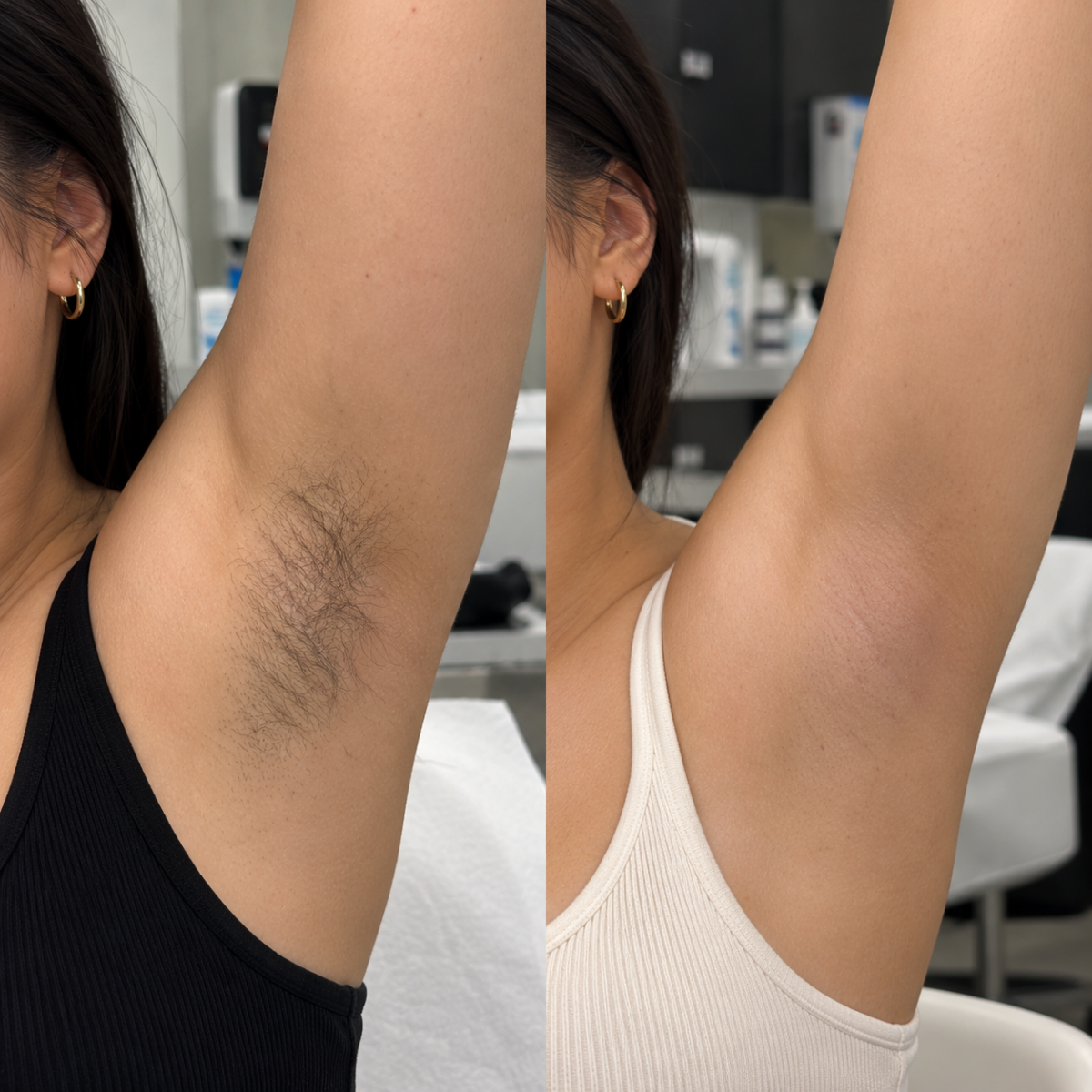
Underarm Laser Hair Removal
The underarms are a commonly treated area because hair is often coarse and pigmented.
Temporary redness and sensitivity can occur afterward.
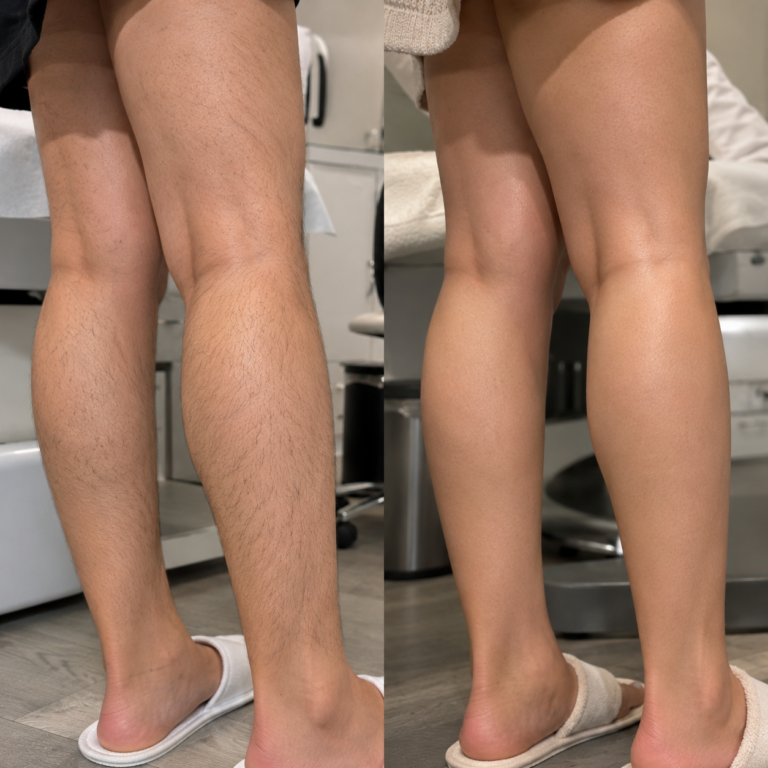
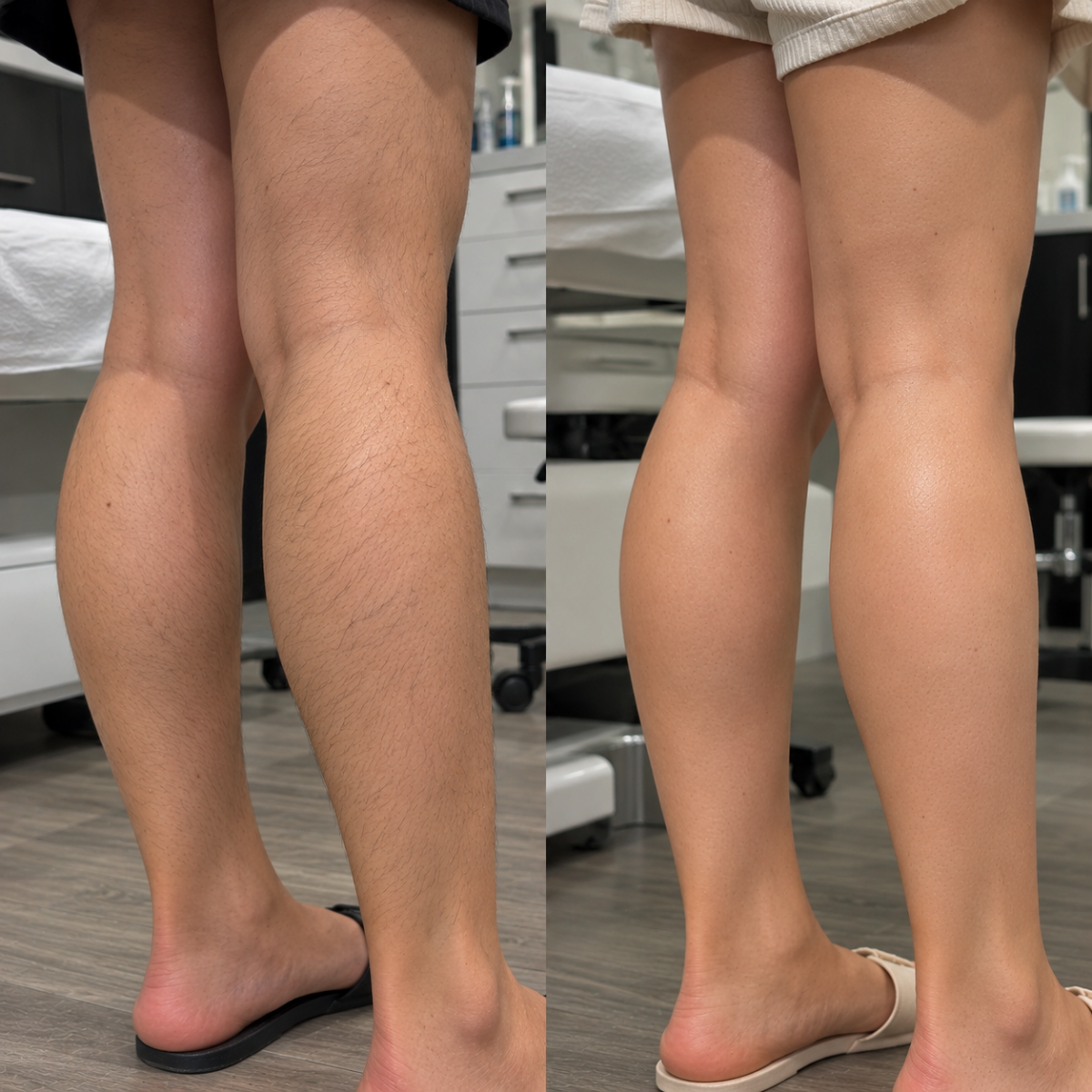
Leg Laser Hair Removal
Leg treatments cover larger areas and may require longer appointments.
Results develop gradually across multiple sessions.
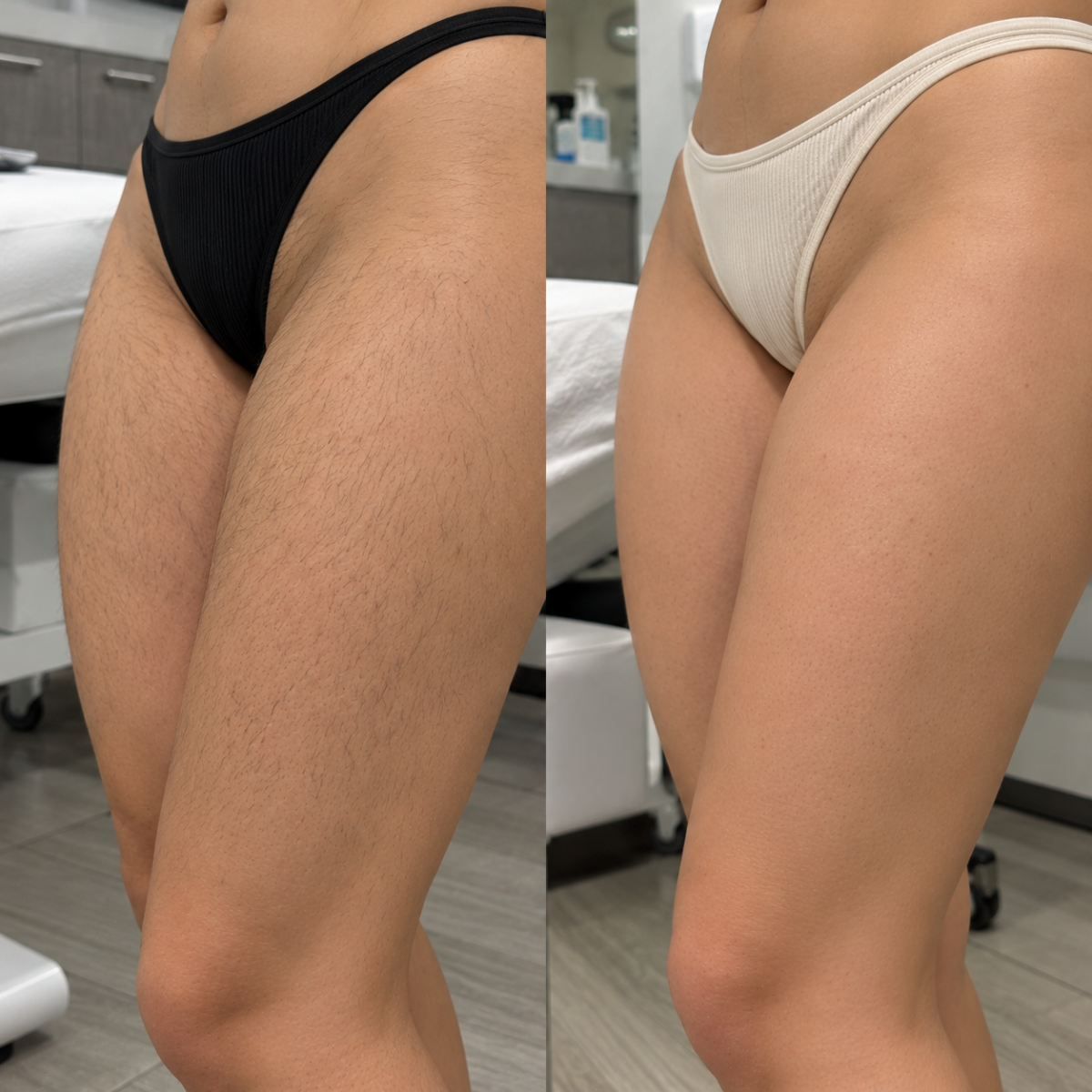
Bikini Area Laser Hair Removal
Laser hair removal may reduce unwanted hair in selected bikini areas.
Treatment should be performed with appropriate privacy, safety, and skin protection.
Back and Chest Laser Hair Removal
Back and chest treatments may be suitable for people with unwanted coarse hair in these areas.
Treatment planning depends on hair density, skin type, and the size of the area.
Is Laser Hair Removal Effective for Every Skin Tone?
Laser hair removal can be performed on a range of skin tones, but appropriate device selection is essential.
People with darker skin tones have more epidermal melanin, which can increase the risk of unwanted heating, burns, and pigmentation changes if the wrong technology or settings are used.
Certain long-pulsed Nd:YAG laser systems are often considered for darker skin types.
An experienced provider should assess skin tone, recent tanning, hair characteristics, and device suitability.
Does Laser Hair Removal Work on Blonde, Gray, or White Hair?
Laser hair removal generally works best on hair containing enough pigment to absorb the laser energy.
Blonde, red, gray, and white hairs may respond poorly, especially when pigment is limited.
For hair that does not respond to laser treatment, electrolysis may be an alternative worth discussing.
What Are the Possible Side Effects of Laser Hair Removal?
Common temporary effects include redness, mild swelling, and skin sensitivity.
Less common but important risks include burns, blistering, changes in skin pigmentation, scarring, and infection.
Rarely, increased hair growth can occur in or around treated areas, a phenomenon known as paradoxical hypertrichosis.
Eye injury is also a serious risk if appropriate protective measures are not followed.
A consultation helps identify factors that may increase your risk.
Can You Shave Between Laser Hair Removal Sessions?
Shaving is generally allowed between sessions once the skin has recovered.
Unlike waxing or plucking, shaving does not remove the hair follicle’s target beneath the skin.
Avoid shaving while the treatment area remains significantly irritated.
Follow your provider’s instructions about when to shave before your next appointment.
Can Laser Hair Removal Cause Ingrown Hairs?
Laser hair removal may help reduce ingrown hairs in some patients by decreasing hair growth.
However, it does not guarantee that ingrown hairs will disappear completely.
If you experience persistent inflammation, painful bumps, or signs of infection, seek professional evaluation.
How Long Do Laser Hair Removal Results Last?
Results vary.
Many people experience long-lasting hair reduction after completing a treatment series.
However, some follicles may produce hair again over time.
Hormonal changes, treatment area, and individual factors can influence regrowth.
Maintenance sessions may be recommended when needed.
Is Laser Hair Removal Better Than Waxing or Shaving?
Method | Main Advantage | Main Limitation |
|---|---|---|
Shaving | Convenient and inexpensive per use | Hair returns relatively quickly |
Waxing | Removes hair from the root | Requires repeated treatments and may irritate skin |
Laser hair removal | Can provide long-term hair reduction | Requires multiple sessions and suitable hair pigment |
Electrolysis | Can permanently remove individual hairs | Often time-consuming, especially for large areas |
The most suitable method depends on your goals, hair characteristics, skin sensitivity, and budget.
How Much Does Laser Hair Removal Cost in Grapevine, TX?
The cost of laser hair removal depends on several factors, including the treatment area, number of sessions, technology used, and clinic pricing.
Smaller areas, such as the upper lip, generally have different pricing from larger areas, such as the legs or back.
Because most patients require multiple appointments, it is helpful to ask about the total expected treatment cost.
Contact Dr. Lift Spa for current pricing, available treatment areas, and package options.
Why Choose Dr. Lift Spa for Laser Hair Removal?
Dr. Lift Spa provides aesthetic and wellness services in Grapevine, Texas.
Patients exploring laser hair removal can inquire about available technologies, treatment areas, and consultation options.
The clinic serves individuals from Grapevine and nearby communities, including Southlake, Colleyville, Flower Mound, Keller, Bedford, Euless, Coppell, and surrounding Dallas–Fort Worth areas.
Before scheduling treatment, ask about device suitability for your skin tone, expected treatment frequency, and potential risks.
Save With Dr. Lift Spa Memberships
Dr. Lift Spa offers membership options for eligible aesthetic and wellness services.
If you are considering laser hair removal, ask whether your preferred treatment area is included in a membership or available package.
Laser Hair Removal Before and After Photos
Frequently Asked Questions About Laser Hair Removal
Avoid tanning, follow instructions about shaving, and stop waxing or plucking for the recommended period. Tell your provider about medications and skin conditions.
Avoid intentional tanning, waxing, plucking, and irritating skincare products according to your provider's instructions.
Yes. Many providers recommend shaving approximately one day before treatment, but follow your clinic's specific instructions.
Temporary redness, warmth, or swelling around follicles may occur. Treated hairs may begin shedding over the following weeks.
Mild redness often improves within hours to a couple of days. Contact your provider if symptoms worsen or persist unexpectedly.
Some treated hairs may shed over approximately one to three weeks. More noticeable hair reduction usually develops across multiple sessions.
Some hair may regrow. Laser treatment is intended to provide long-term reduction rather than guaranteed complete, permanent removal.
Many patients need approximately six or more sessions, but the number depends on the treatment area and individual response.
Your provider may allow gentle washing while recommending that you avoid very hot water and irritating products until the skin has settled.
Your provider may recommend temporarily avoiding strenuous exercise if sweating, heat, or friction could irritate the treated area.
Ask your provider when to resume deodorant, especially if the underarm skin remains sensitive.
It can be appropriate with suitable technology, settings, and professional expertise. Incorrect treatment settings can increase the risk of burns or pigment changes.
It can produce long-lasting hair reduction, but regrowth and maintenance treatments are possible.
Reducing hair growth may also reduce ingrown hairs in some patients, although results vary
Suitability depends on the cause of sensitivity, skin condition, and device. An assessment is important before treatment.
Laser Hair Removal Grapevine TX is an FDA-approved treatment for cosmetic use, widely recognized for its safety and effectiveness (learn more from the FDA).
Laser Hair Removal Aftercare Checklist
After your appointment, follow these general precautions alongside your provider’s specific instructions:
Use gentle skincare products while the area recovers.
Avoid intentional sun exposure and tanning.
Limit excessive heat and friction when the skin is irritated.
Avoid picking, scratching, or aggressively exfoliating treated skin.
Allow treated hairs to shed naturally.
Contact your provider if you experience blistering, worsening pain, or unusual skin changes.
Final Thoughts: What to Expect Before and After Laser Hair Removal
Understanding what to expect before and after laser hair removal can help you prepare for treatment and maintain realistic expectations.
Before treatment, proper preparation includes avoiding tanning, following shaving instructions, and discussing medications and skin conditions with your provider.
After treatment, temporary redness and mild sensitivity are common, while hair reduction develops gradually over multiple sessions.
The best results depend on appropriate technology, professional assessment, consistent treatment scheduling, and proper aftercare.
If you’re considering laser hair removal in Grapevine, TX, contact Dr. Lift Spa to learn about available treatment areas and consultation options.